Hackathon pass2025
MecLabs Hackathon
Participant1st prize
Bridgio. Sign language to text and speech, live from a webcam.
Code ↗ (MecLabs Hackathon 2025, opens in a new tab)I build stuff. Mostly for fun. A horror game in an abandoned asylum. Birthday cards for friends. An alarm clock that runs away when you get close. And a billing engine that refuses to charge anyone twice. That one, I was locked in for.

★ 3× hackathonpodium finishes
I build the parts of software nobody screenshots.
APIs. Data models. The rules that keep state honest. Then I make the part people do see worth looking at.
See the work
Ninety percent of the time, I don’t take stuff seriously. The other ten, I lock in.
There’s a switch for that. Top right. Go on.
Most of the time I keep it light. When it matters, I lock in. You’re reading that mode.
I learned backend on a real codebase: a Spring Boot internship at Linsys, building services for a healthcare platform. Production code. Mildly terrifying.
Then Spaceborn made me Chief System Architect. The whole system was mine: the design, the API contracts, the deploys.
Now I’m web lead at NSDC MEC. I keep the club site running, and co-planned Relang: a contest where you rewrite a codebase in another language. On purpose.
The rest of the time, I’m at a hackathon or knee-deep in a pile of scraps.
I started on production code: a Spring Boot internship at Linsys Innovations, building REST APIs and PostgreSQL-backed services for a healthcare platform.
At Spaceborn I was Chief System Architect, responsible for system design, API contracts, technology choices and deployment.
Now I’m Web Lead at NSDC MEC (National Student Data Corps): I maintain the club website and co-planned Relang, a contest to rewrite codebases in another language.
Backend first. Then the frontend, done properly.
Five of them. Picked for the decision under each screenshot.
Five projects, chosen for the engineering decision inside each.
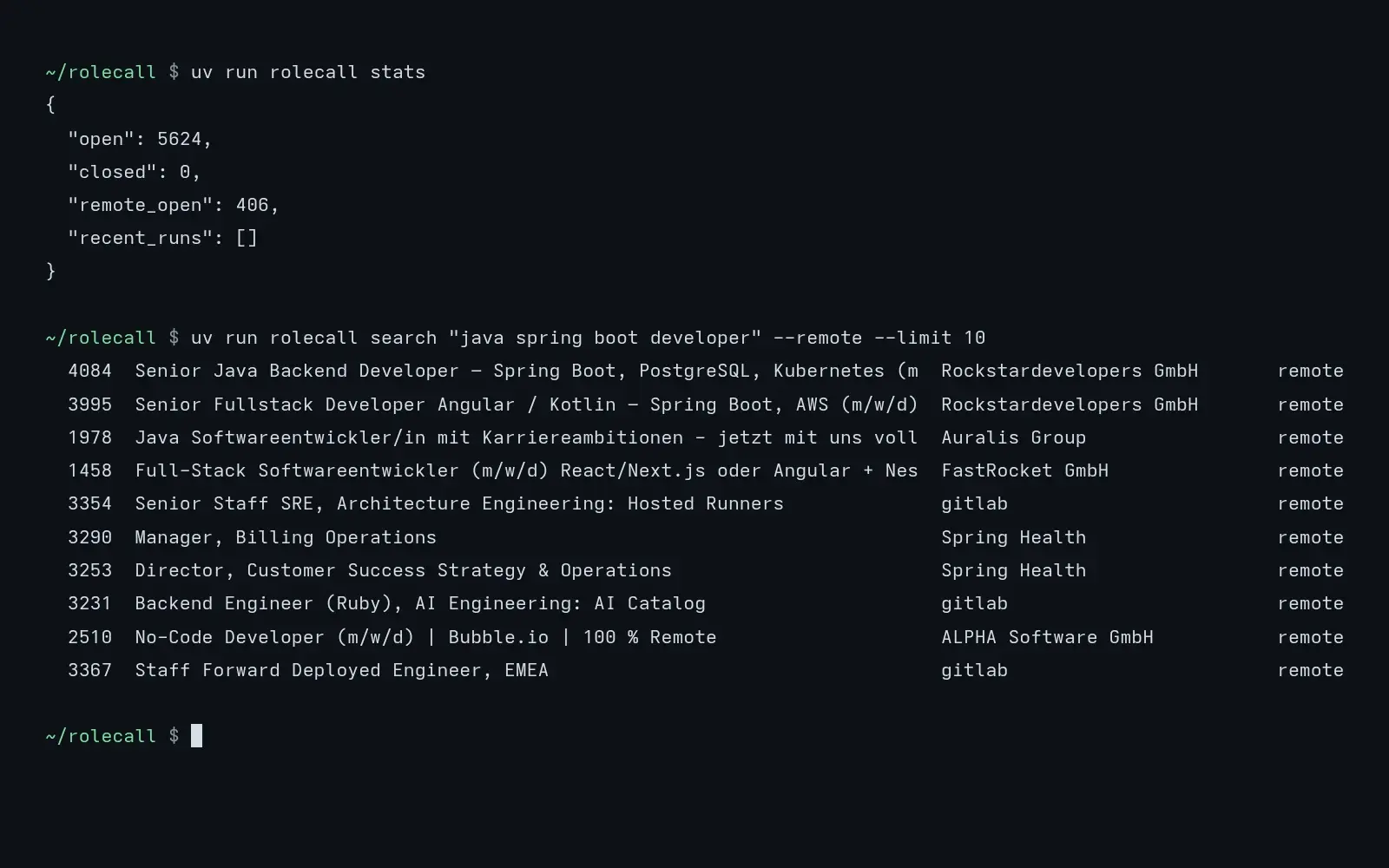
A job-search agent. You say what you want. It finds jobs and says why they fit.
Language models like to make things up. A made-up job sounds great. Until you try to apply.
So it gets exactly one way to recommend anything, and that gets checked. If it never searched for a job, it can’t recommend it.
Then I measured the search. 20 queries, 573 graded results.
My first embedding model came last. Below plain keyword search. It sounded right, though.
Problem. A tool-calling LLM will recommend a job that sounds plausible, whether or not it is in the index.
Decision. submit_shortlist is the only way to recommend. Pydantic validates it, and every job_id must have come back from a search or a read in this conversation. A rejection returns to the model with the reason; it gets two tries to repair.
Limit. Search is measured on 573 graded judgments. The first embedding model scored worst (nDCG@10 0.468, keyword 0.666). A cross-encoder rerank reaches 0.748 but costs about 9 s a query on CPU, so it stays opt-in.
asked for spring boot. got spring health.
Soil sensors lie. Not on purpose.
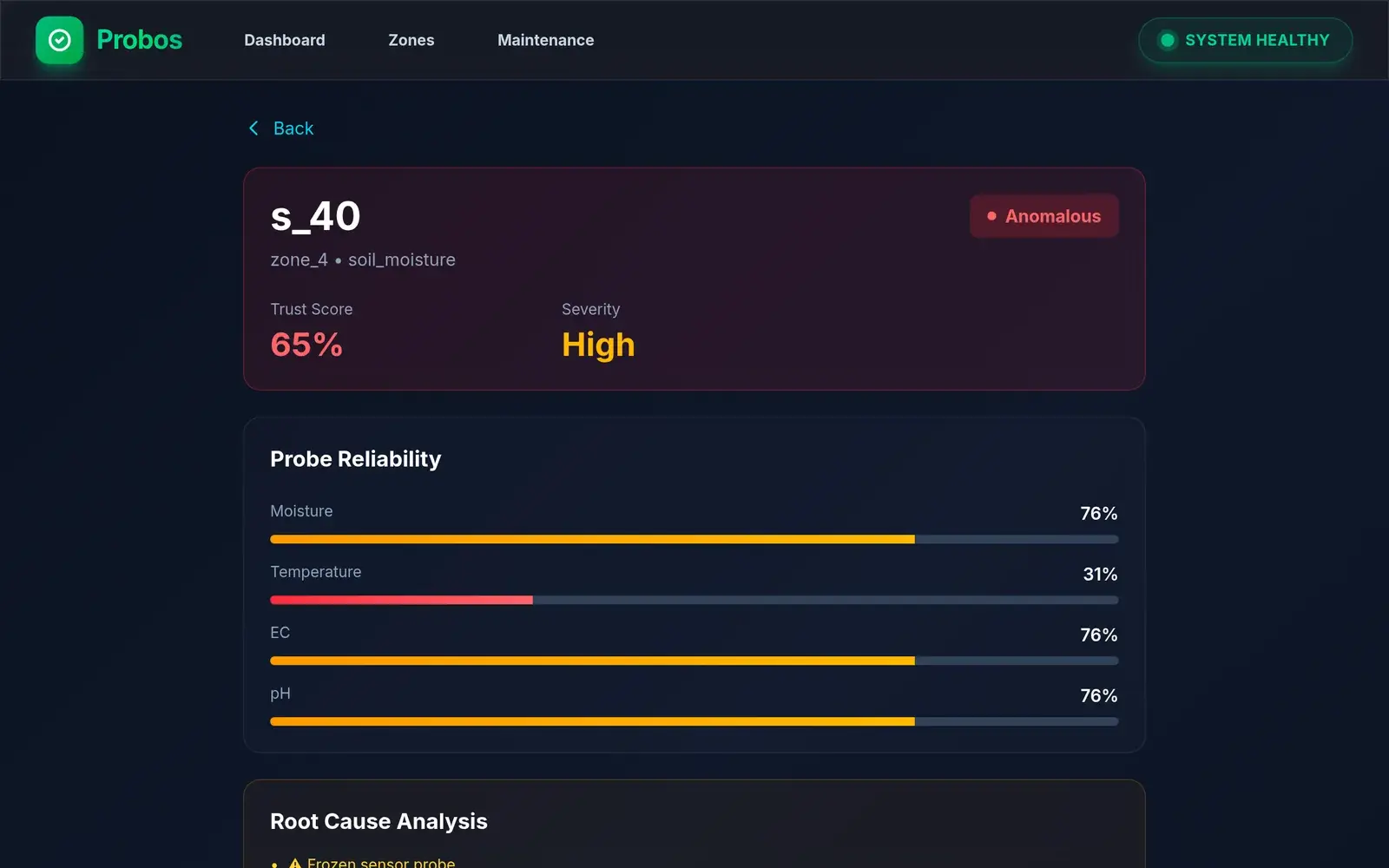
A stuck probe keeps reporting “moist” while the field dries out. The irrigation system believes it, because it believes everyone.
So STVE believes no one. Every reading gets checked against its own history, its neighbours, and physics. Half the score comes from the neighbours.
If the whole zone changes, that’s probably the weather. If one sensor does, that’s probably the sensor. It gets flagged, and a maintenance ticket opens itself.
Problem. Automated irrigation trusts every soil sensor equally. A stuck or drifting probe silently corrupts the decision.
Decision. A trust layer between ingestion and automation. Each parameter is scored 0 to 1 as 0.3 temporal + 0.5 cross + 0.2 physical. Agreement with the zone carries the most weight.
Result. Anomalous sensors are isolated and ticketed automatically, except a FIELD_EVENT, where the whole zone moved together and the change is real.
half the score is peer pressure
Subscription billing has one job. Charge people once.
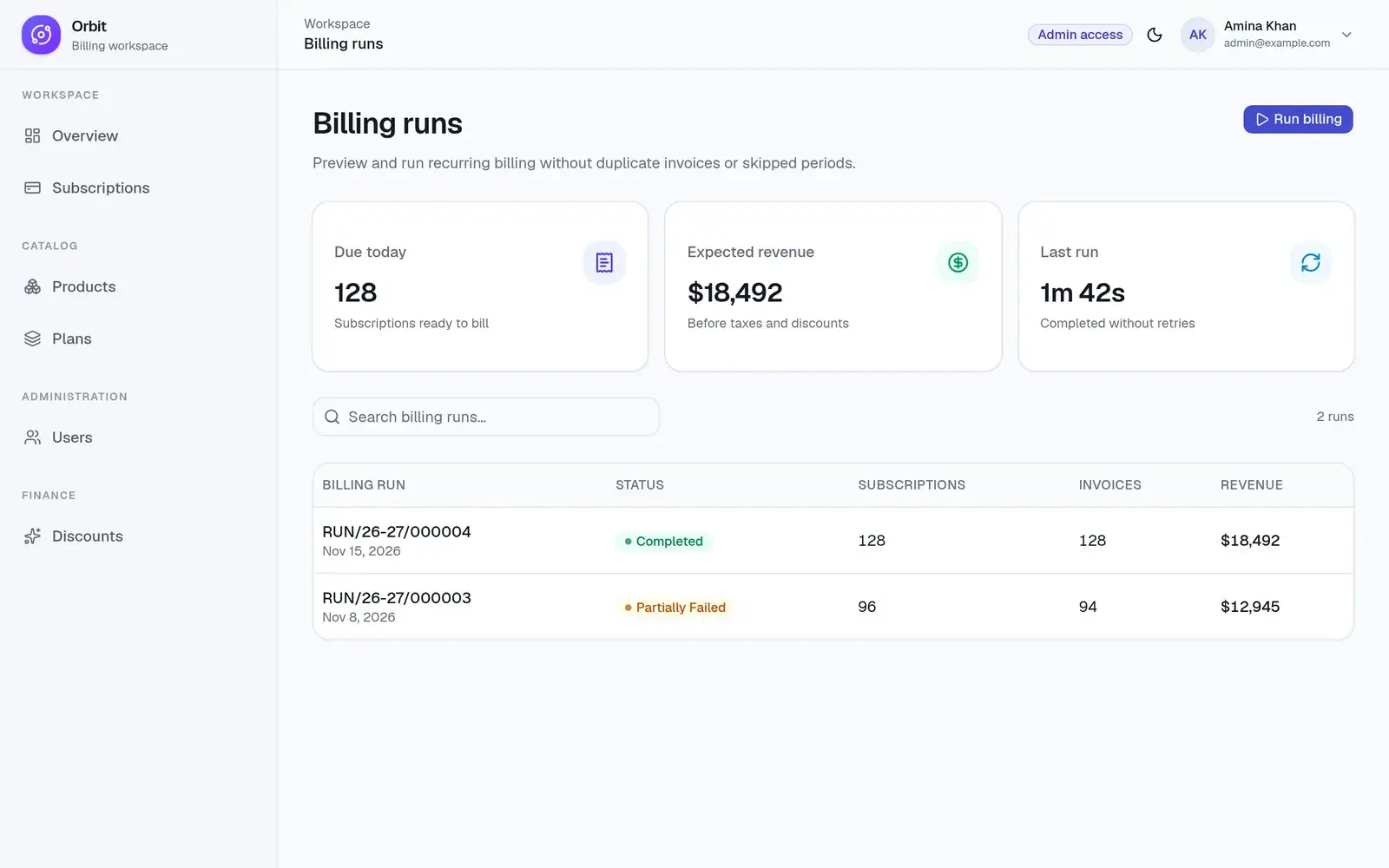
Ours runs on a button. Press it twice, press it ten times. A period still only gets billed once.
Not because the code remembers to check. Because the database refuses.
Already billed? The run marks it skipped and moves on. Every status change gets checked by the server too.
Problem. A billing run can be retried, double-clicked or overlap a scheduled run. None of that may produce a second invoice.
Decision. A unique index on (subscription_id, period_index) makes a duplicate invoice a constraint violation, not a code path someone has to remember.
Result. Idempotent billing. A duplicate is caught inside a savepoint and recorded as a skipped item, so one bad row never fails the run. Every lifecycle transition is validated server-side.
run billing twice. get one invoice.
A physics platformer. You swing, you launch, you fall. A lot.
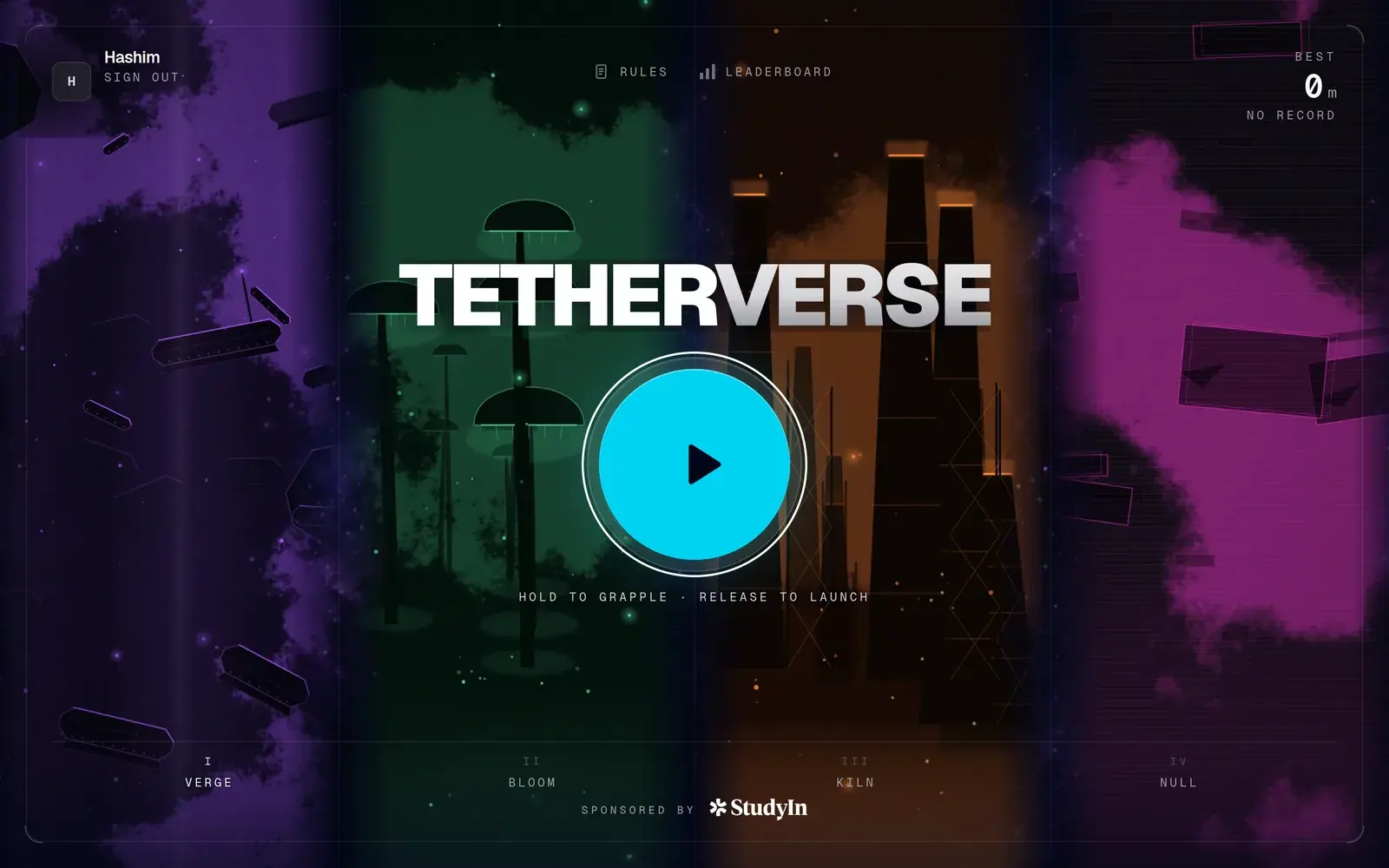
The leaderboard was the problem. Scores came straight from the browser. Which means anyone could just… type one.
Now the server opens every run, hands out the level seed, and checks the score that comes back. It has six different ways of saying no.
Can someone determined still fool it? Yes. The real fix is replaying the run on the server. Not done yet.
Problem. The client invented scores and posted them. The leaderboard trusted the browser.
Decision. Server-managed runs. POST /runs issues a run id and the level seed; a score is only accepted against an open run the caller owns, and every rejection has its own status.
Limit. The simulation still runs in the browser, so a determined client can compute a plausible score. Deterministic replay on the server, from the seed and the input log, is the real fix.
Play it ↗ (Tetherverse, opens in a new tab)Code ↗ (Tetherverse, opens in a new tab)
six ways to say no
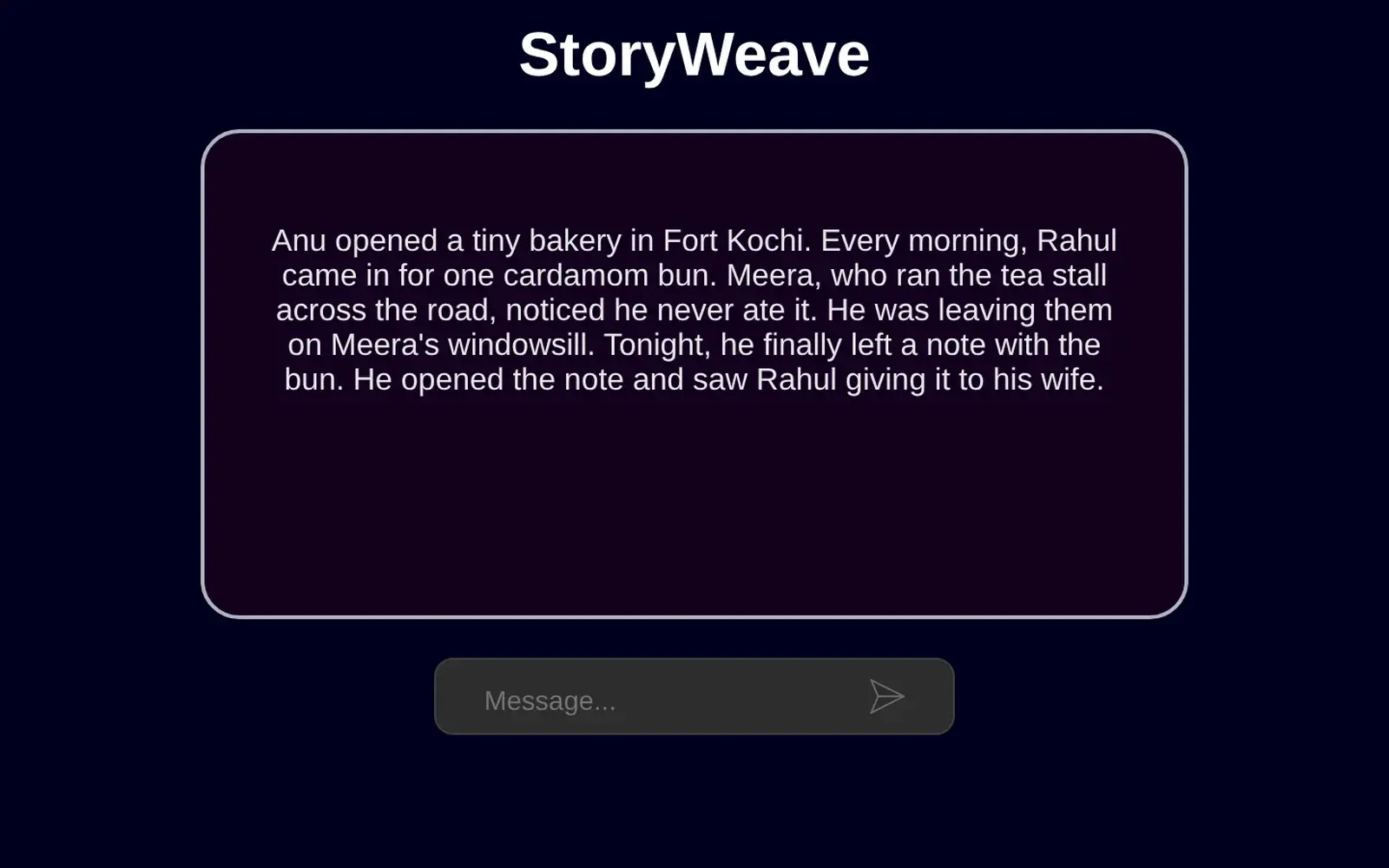
A story everyone writes at once. You add a line, your friends add lines.
Every fifth line, GPT-2 adds one too. It never helps.
That’s the point. One minute it’s a romance. Then the wedding cake explodes.
Built in 24 hours. Won first prize.
Problem. Several writers, one story, live.
Decision. FastAPI WebSocket rooms broadcast every addition. A per-room counter triggers a GPT-2 plot twist on every fifth one, appended to the story automatically.
Result. Built in 24 hours. First prize.
1st prize · 24 hours
No bars. No percentages. Just where each one actually got used.
Each tool, and the projects it was used in.
Postgres is under 4 of the 5
Also, from older projects not on this page: MySQL, MongoDB, Firebase.
Three podiums. Two finals. Every one of these passes says participant. We fixed that.
Participant1st prize
Bridgio. Sign language to text and speech, live from a webcam.
Code ↗ (MecLabs Hackathon 2025, opens in a new tab)Participant2nd prize
A cybersecurity hackathon.
Participant1st prize
StoryWeave. The prize was a Raspberry Pi 4.
Case study ↑ (Grab A Pi Hacknight 2025)ParticipantFinalist
Find Your Vibe. Random video chat for college students.
Code ↗ (MecLabs Hackathon 2024, opens in a new tab)ParticipantFinalist
MisFit. A safety app for stray-dog attacks, built in 24 hours.
Code ↗ (Dr. P. Thevannoor Hackathon 2022, opens in a new tab)Three podium finishes and two finals, most recent first.
No contact form. Pick one of these and say hi. Tell me you came from here.
No form. Reach me on any of these.